

When to Water Your Garden (and Why Timing Matters More Than Quantity)
Posted by Heather, Master Gardener at MetalGardenMarkers.com on 27th Apr 2026
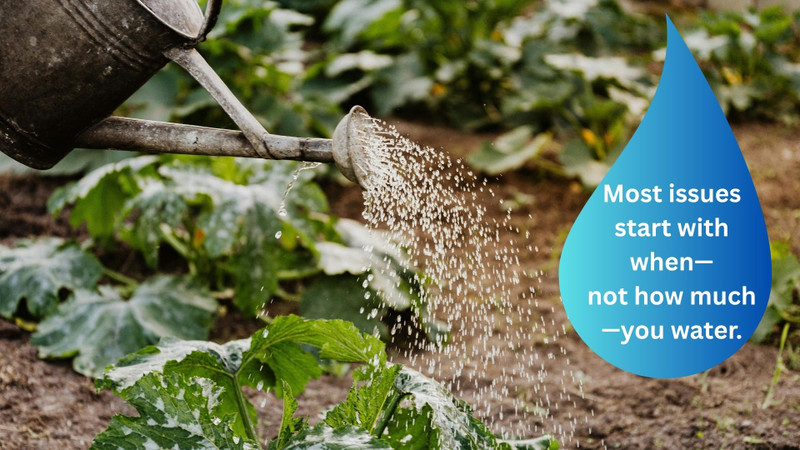
When to Water Your Garden (and Why Timing Matters More Than Quantity)
Most watering problems aren’t about how much water you use.
They usually come down to timing.
This time of year, as temperatures rise and plants start putting on real growth, when you water begins to matter more than most people expect.
It affects how deep roots grow, how plants handle heat, and even whether disease shows up later on.
Start With This Simple Rule
Water deeply. Water early.
That’s it.
When you water in the morning, moisture has time to move down into the soil before the heat of the day pulls it back out. Leaves also have time to dry, which quietly reduces disease pressure.
Water later in the day, and you often end up with damp foliage sitting overnight—even if the soil itself is fine.
What Actually Changes When You Get This Right
Roots go deeper
If water reaches down, roots follow it. Over time, that gives you plants that don’t struggle the moment things dry out.
Moisture stays more stable
Instead of the surface constantly swinging between wet and dry, the soil holds moisture where plants can actually use it.
Fewer disease problems show up
Dry leaves overnight make it harder for common issues to get started in the first place.
What Experienced Gardeners Pay Attention To
They don’t just think in terms of “Did I water today?”
They’re usually asking quieter questions as they move through the garden:
- Did that water actually soak in, or just sit on top?
- Will this bed still have moisture by midday?
- Are these leaves going to stay damp overnight?
Those small checks tend to prevent bigger problems later.
Where Things Often Go Wrong
Frequent, light watering.
It keeps the surface looking good, but it doesn’t do much below that.
Roots stay shallow. Soil dries out faster than expected. And plants end up needing more attention, not less.
It turns into a cycle:
- You water often
- The soil dries quickly anyway
- Plants start to stress in the heat
Deep, less frequent watering breaks that pattern over time.
A Simple Routine That Helps
Most experienced gardeners don’t treat watering as a separate task.
It’s just part of a morning walk through the garden.
Same path. Same beds. Same quick checks.
After a while, you start to notice things without trying:
- Which areas dry out faster
- Which plants are pushing ahead
- Where something feels slightly off
That awareness is what makes everything else easier.
This Is Where Guessing Starts to Fade Out
By early summer, every garden starts to show its tendencies.
Some things thrive. Some lag. A few struggle no matter what you do.
The difference over time isn’t effort—it’s noticing those patterns and remembering them.
You Don’t Need a Complex System
Just pay attention to a few things:
- What’s growing well
- What isn’t, even with the same care
- Where water drains quickly—or doesn’t
- How sunlight actually moves across your space
Right now, those patterns are obvious.
By winter, they’re surprisingly hard to recall clearly.
Where Most People Lose Track
They rely on memory.
And by the end of the season, everything blends together:
- What worked
- What didn’t
- What should be repeated
Without something to anchor those observations, next year starts from the same place again.
Keep It Simple
A notebook helps. A note on your phone works just as well.
Even a consistent mental check during your morning walk is enough.
You’re not trying to track everything.
Just enough to make better decisions next time.
Where Clear Labeling Quietly Helps
One thing that makes this easier is knowing exactly what you’re looking at.
When plants are clearly labeled, your observations stay tied to the right variety—not just a general memory of “something that did well.”
That connection is what turns this year’s observations into next year’s improvements.
Many gardeners use durable aluminum garden markers so that information doesn’t get lost as the season moves along.
Closing Thought
Watering feels simple because we’ve all done it.
But it’s one of the few habits that touches every part of the garden, every day.
Get the timing right, and a lot of other problems never show up in the first place.